1860: the house of the well and the rabbit
A twenty-metre well under the staircase, two houses stitched together by inner doors, and a plot paid for with a rabbit. The true story of Cal Cot, as the family keeps it.
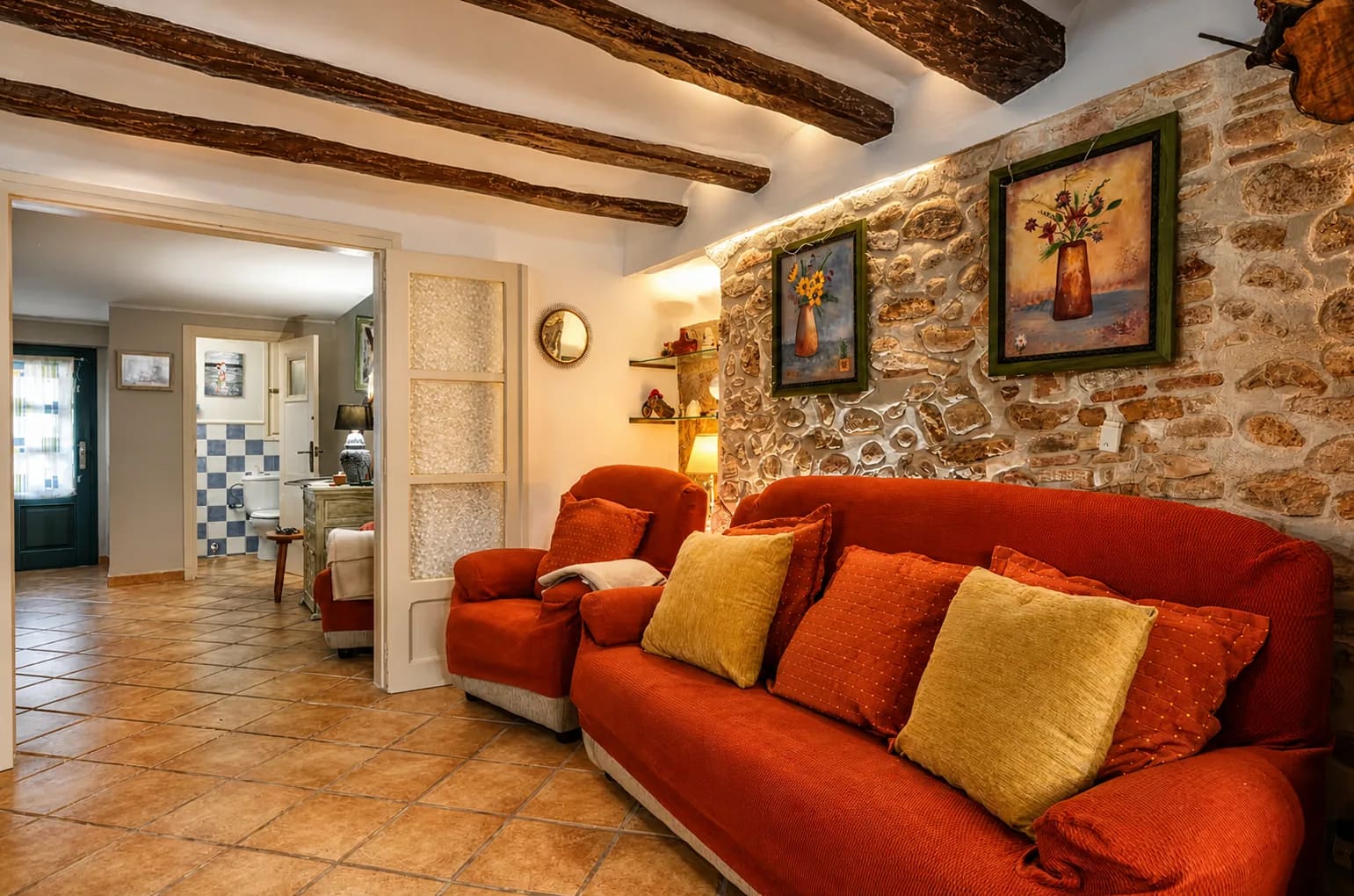
The house was raised around 1860 by Joan Isern Pallejà, born about 1836 and married to Teresa Saladié Escoda of cal Pep, Castelló. The family came from L'Arbolí, up in the hills, and the village always called the place "cal Cot". The first Cot is still here — his photograph hangs by the fireplace in the entrance hall.
The detail everyone loves: since the Church couldn't sell its land, the plot was exchanged for the symbolic price of one rabbit. All of this began with a rabbit.
It was really two houses, stitched together from inside by doors through the party wall. You can still read them in the stone: where the wooden coat rack hangs today there was a door; the timber-lintelled opening beside the fireplace was the stable, where the mule rested after a day's work.
Under the stairway vault sits a well — sealed now, but intact — a metre and a half wide and some twenty metres deep, dug by hand. It watered the family, like the one in the village's Well Square. The little cellar under the kitchen was the rainwater cistern.
The sitting-room ceilings are original: vaults of cane, straw and clay between timber beams — everything sourced from right here. In the first-floor bathroom, the niche in the stone wall, once painted blue, was the family's household shrine: the oil lamp was left burning there.
Between 2018 and 2021 the family restored the whole house: walls stripped back to stone carried up from the Llastres riverbed and refinished in hydraulic lime — the same technique used to consolidate the village's medieval hospital. The house now offers a hundred square metres over three floors, and the same patience as ever.